The Half-Life of a Number: Specifying Data Freshness Before It Costs You a Decision
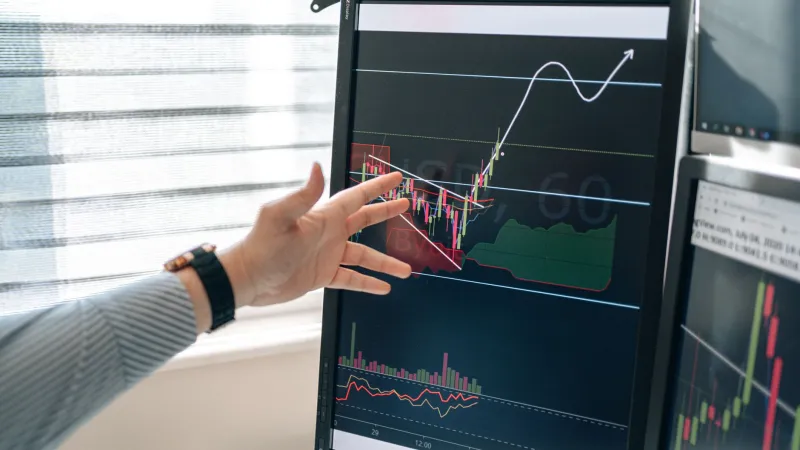
At 4:55 on a Friday afternoon, a regional operations lead pulls up a fulfillment view, sees the backlog number, and makes a staffing call for Monday. The figure on the screen is accurate to the minute. Across the building, a supply planner consults a supplier performance dashboard that refreshes nightly and unknowingly reasons about Tuesday's conditions. Both dashboards look identical. Both are trusted. Only one is current, and nothing on either screen says which.
This is the quiet failure mode of modern tracking: not bad data, but data of unknown age presented with unearned confidence. Most organizations have invested heavily in getting numbers into dashboards and comparatively little in establishing how old those numbers are allowed to be before someone is told.
The Dashboard Is a Claim, Not a Certificate
A rendered chart makes an implicit assertion — that what you are reading reflects the state of the business now. That assertion is rarely tested. In practice, a metric can lag by minutes, hours, or an entire business day depending on where it originated, how it was staged, and which transformation layer last touched it. The visual treatment does not change. A red bar born of stale inputs is still a red bar, and it will still drive a meeting.
The consequence is not that teams make a single wrong decision. It is that teams develop an unspoken calibration problem: they learn, through occasional embarrassment, which dashboards to distrust. That knowledge lives in individuals rather than in the system, which means it leaves when they do — and it never reaches the people making the largest commitments.
Freshness Is a Property of a Workflow, Not a Platform
Buyers frequently ask vendors for a single freshness figure, as though a platform could carry one. It cannot. Freshness is a property of each workflow that consumes data, and different workflows tolerate very different lags.
A warehouse exception queue may need sub-five-minute updates, because the cost of delay is a missed cut-off. A monthly margin review may be entirely sound on data that is two days old. A customer-facing inventory promise sits somewhere between, with a tolerance set by service expectations rather than by engineering convenience. Pinning one number to an entire platform is a category error, and it produces the familiar outcome in which every team reports the same service level while living with wildly different realities.
The practical move is to enumerate the workflows that actually depend on the feed, assign each a defensible tolerance, and record who accepted that tolerance. This is a governance exercise before it is a technical one.
Four Clocks Inside Every Feed
Freshness is not a single moment. Between an event occurring and a decision-maker seeing it, at least four delays accumulate: the interval before the source system records the event, the interval before that record is ingested, the interval consumed by transformation and validation, and the interval before the result reaches the surface where it is read. Most reporting consolidates these into one opaque figure, if it surfaces anything at all.
Instrumenting each stage separately is what makes the difference between a number that can be defended and a number that can only be hoped for. When a feed slips, the distinction determines whether the fix belongs to an integration team, a data engineering group, or the vendor whose export job quietly changed its schedule.
Writing the Contract: Tolerances, Owners, and Escalation
A freshness contract need not be elaborate, but it must be specific. At minimum it should state, for each workflow, the maximum acceptable age of the data at the point of consumption; the named owner accountable for that tolerance; the threshold at which an alert fires; and the escalation path if the alert is not resolved within a stated window. It should also state the consequence of breach — not as punishment, but as an agreed protocol, such as flagging affected reports as provisional until the feed recovers.
That last provision matters more than it appears. Silent backfills are among the most corrosive events in an analytics environment: a feed stalls, is repaired, and history is rewritten with no record that anyone reading at the time was working from an incomplete picture. A contract should require that late-arriving data be labeled as such rather than blended invisibly into the stream.
Instrumentation Details That Make the Contract Enforceable
Freshness commitments fail when they depend on someone remembering to check. They hold when the system checks itself. That means timestamping at the point of origin and carrying that timestamp, not just the arrival time, through every hop. It means exposing the resulting age metadata through the same interface as the metric itself, so a reader can see currency without leaving the view. And it means treating a stale feed as a first-class incident — one that pages, trends, and appears in the same operational review as any other service interruption.
There is a worthwhile design principle here: a broken feed should be louder than a slow one, and a slow one should be louder than a merely incomplete one. Without that ordering, alert fatigue resolves the problem by suppressing it.
What to Ask a Vendor Before You Sign
For buyers evaluating a tracking platform, freshness is a procurement question. Does the vendor expose ingestion and event timestamps through an API, or only a rendered figure? Can a freshness threshold be configured per feed, and does a breach trigger a notification to a named address? What happens to the record when a late batch arrives — is it annotated, or silently merged? And is there a documented commitment to notify customers of upstream changes that alter feed cadence, rather than letting them discover it through an anomalous report?
These questions separate platforms designed for operational decision-making from those designed for presentation. The former treat data currency as a contract term. The latter treat it as an implementation detail.
The Cost of Not Knowing
As peak season and year-end close converge, the tolerance for ambiguity narrows sharply. Decisions compress into hours, and the penalty for reasoning from a stale figure compounds across inventory, labor, and customer commitments. The organizations that navigate this period well will not necessarily have the most sophisticated dashboards. They will be the ones whose people know, without asking, exactly how old the number in front of them is — and what to do when it is older than it should be.
Freshness is not a feature to be switched on. It is an agreement to be written, instrumented, and enforced, one workflow at a time.